
Imagine one fine day, someone started dictating your dating life – telling you whom to ‘swipe right’ on, whom to go out on a date with and so on? Sounds absurd, right? And yet, are you already under someone’s control while getting lost in the swipe battle of digital profiles on your screen? More often in my dating app expeditions, I have ended up like a cow grazing endlessly, chewing through the same patches of grass repeatedly, under the growing desperation of “finding the one”? I’m sure this ‘illusion of choice’ has struck you as well in dating apps.
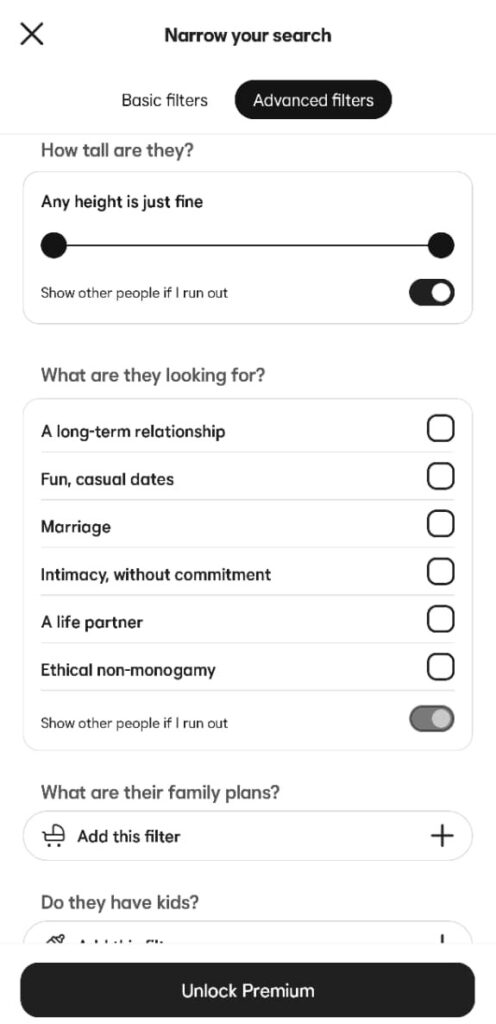
Recently, Tinder’s plan to introduce a height filter feature made headlines – and not for the right reasons. The internet was outraged. However, the truth is that the ability to filter your ‘potential’ matches based on traits like age, height, weight, and religion, to name a few, has already been available to premium users on dating apps like Bumble. In the effort to make romance more ‘user-friendly’, dating apps have turned romance into consumerism. And that’s the trap: users being mere products of the gaze in the ‘infinite swipe’ of dating apps. These apps now behave like e-commerce apps, letting you apply appropriate filters to pick the ‘perfect’ choice off the shelf.
But what do these apps really want you to do? Finding you the perfect match doesn’t seem to be their top priority. Instead, they lure the user base into the “reward system” of swipes, offering moments of instant gratification – a match here, a chat there – just enough to keep you hooked. This reality check has led me to ask the following question. How would a dating app profit if their performance metric is successful long-term relationships? Then you don’t really need to use these apps anymore. Instead, they want you to just get matches you would want to talk to, go meet, yet make you want to swipe right on other profiles, because what if you find a better one? A higher success rate of relationships would simply mean a decline of their user base. They want the desperation to persist, the confusion to increase, while they dangle a few success stories to keep you locked in, with hope. To lure more people into the apps in search for their perfect halves, only to find matches, not mates.
Also, do we know how these love shopping algorithms work? With our extended experiences on the dating playground, we might be able to guess. Despite the suspicious patterns, India has been one of the fastest-growing dating app markets, and the variety of dating apps also growing – from Tinder, Bumble, Hinge, etc., to a huge chunk of vernacular apps like Arike (Malayalam), Anbe (Tamil), Neene (Kannada), Neetho (Telugu) as well as religion and community focused ones like muzz, Holy, JSwipe, queer-focused apps like Grindr, Scruff, HER and class-oriented platforms such as Millionaire Match and Raya. The list doesn’t end here. This increasing pool of options also poses significant questions. Are we going to demand some transparency and accountability from these companies for commoditising a fundamentally human experience?

What adds to this uncertainty would be the intense amount of personal data that’s being collected by the various dating apps. Unlike any other apps collecting your personal data, dating apps wield the double-edged sword of having minutiae from your voice notes, likes and dislikes to even your HIV status and sexual life experiences. Though apps provide information regarding their use of information and data, it can also be quite misleading and often neglected by users. The reward systems behind the sharing of data like biometric information and geolocation often urge you to share them, on a hope that a more complete profile would attract more matches. What could be the consequences of these companies controlling a huge amount of sensitive personal data and people’s vulnerabilities?
So, what could transparency in the virtual dating world look like? Most of the dating apps operate as virtual ‘black boxes’, providing little or no information regarding the selection processes behind those infinite swipes. Transparency, especially in dating apps, could help audit them for bias, and ensure certain characteristics do not unfairly influence the match visibility. If the logic behind the match suggestions is informed to the users, they could also feel in control of their choices, and this could eventually reduce manipulation by the system.
Such transparent systems could also help find answers to the age-old question of gender gap in dating apps. The number of matches that come through on average for female and male profiles in a dating app has always been poles apart. From my conversations with other dating app users, I’ve noticed that men tend to swipe right more liberally on women’s profiles, while women are usually more selective. This often leads to one side having an abundance of matches and the other having fewer, yet both end up facing their own set of challenges when it comes to finding the right connection. Men often view each match as someone who holds strong potential to be ‘the one,’ while women feel overwhelmed, fumbling through the array of options, unable to find someone who truly stands out to them. Although this is purely a cis-het observation, this warped, binary segregation, this illusion of choice, holds the user base captive on dating apps for much longer.
Transparent systems should make it clear how data collected through apps is used and stored. The earlier mentioned study by Mozilla’s ‘*Privacy Not Included’ sheds light on the data hunger of dating apps, revealing that twenty-two of the twenty five dating apps reviewed had ‘bad for privacy’ practices and most of the apps may have shared or sold personal information of users for advertising. With the urgency to integrate AI to most of these apps, the already vulnerable security systems would possibly turn the virtual dating landscape into a privacy war-field. Good luck watching out for red flags in both matches and the apps now! Bundle that with the rising cases of romance scammers who are lunging for your purse while pretending to steal your heart.
The road to a more safe and secure dating world could be that of collaborative effort. Particularly in the Indian context with a wide variety of app options, an industry-led action like that of the Australian Online Dating Code of Conduct could catalyse the process of establishing appropriate safeguards. This would ensure the safety of end-users from the risk of online harms experienced while using dating apps. A set of compliance requirements developed in consultation with government bodies, industry groups and relevant non-government stakeholders would help us to pool in the best practices and expertise to stay ahead of emerging threats. An industry oversight body with an independent compliance committee to review cases would also ensure accountability and public trust. The fact that this action found its success in Australia despite being voluntary speaks to its potential.
The presence of stronger reporting mechanisms, clearer complaint handling and stronger law enforcement engagement would also help build trust in dating platforms. Also, implementing horizontal laws for platform accountability in India, like the European Union’s Digital Services Act (DSA), could require platforms to publish clear content and privacy policies, establish notice and action workflows, explain their content moderation practices, and publish standardised transparency reports. Such measures would give users greater clarity and confidence when sharing personal details in their search for partners.
Though dating apps may be solving a larger chunk of dating challenges from the love-letter era, robust regulations should be put in place to ensure clear boundaries. The ideals of the market shouldn’t dictate modern-day romance. Apps might find you matches, but romance still thrives on compatibility, personal effort, mutual respect and factors outside any algorithm’s radar. As Cupid’s arrows flies amok, love and romance are inevitable, but if apps are to step in and monetise this, they should know toxicity, gaslighting and gold-digging are huge red flags on their part as well.
Akash S S
Akash S S is Project Officer at CDF who is dedicated to protecting digital rights and combatting misinformation.